
Loading...
Serving Springfield, IL and surrounding areas. (217) 572-9991
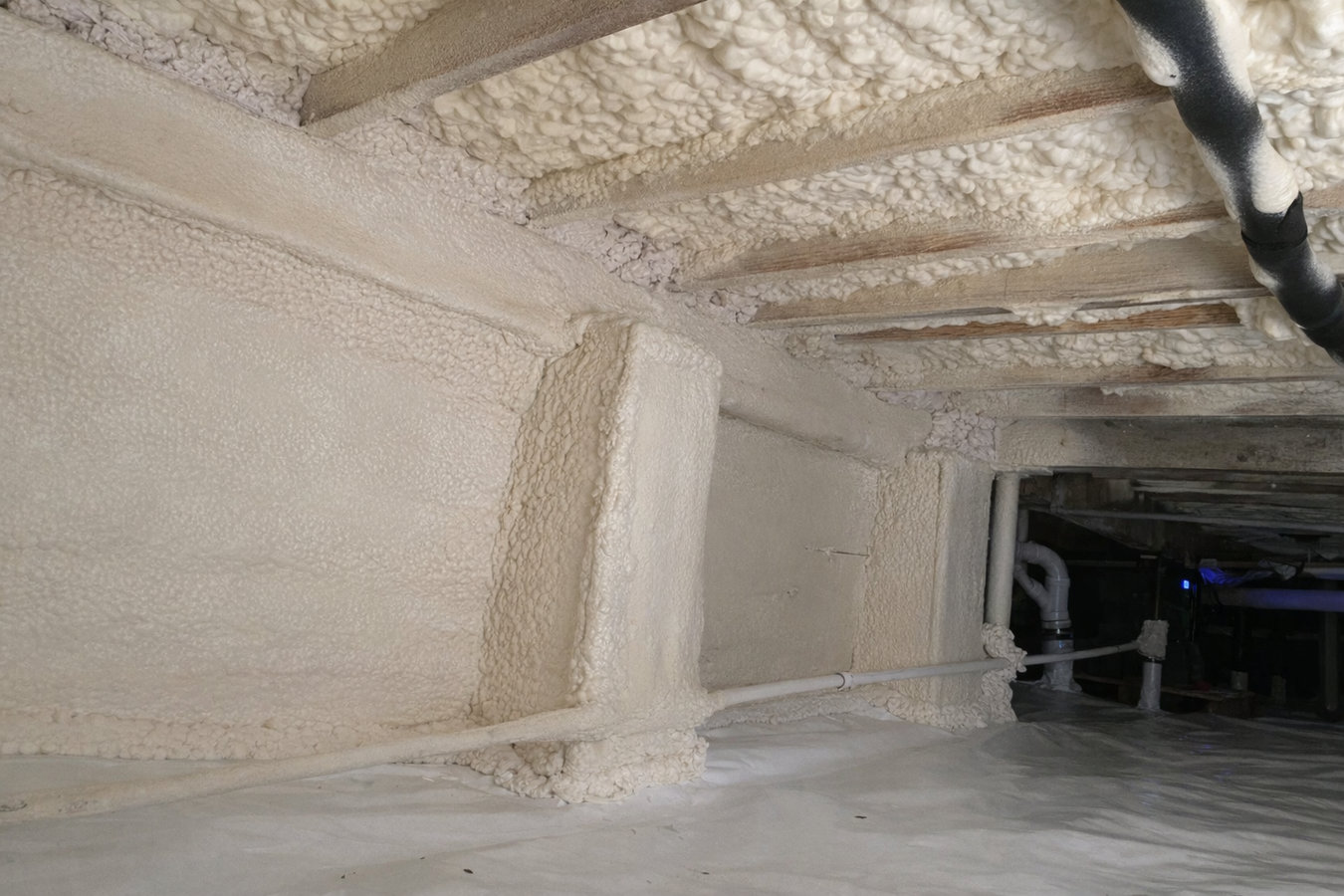
Springfield Insulation Company serves Mattoon, IL homeowners with crawl space insulation, attic blown-in insulation, spray foam, and vapor barrier installation for Coles County homes. We work on Mattoon's pre-1960 wood-frame homes in the established railroad-era neighborhoods, newer ranch homes on the north and east sides of the city, and everything in between, and we reply to every estimate request within one business day.
Mattoon's flat terrain and clay soil keep ground moisture near the surface long after rain events, and homes on crawl space foundations pull that moisture into the floor system without a proper ground cover and wall insulation. Cold, damp crawl spaces make first-floor rooms uncomfortable all winter and cause floor joist deterioration that compounds over years. Our crawl space insulation service addresses both the moisture and the heat loss together, installing wall insulation and a ground vapor barrier in a single project that transforms what is typically the most neglected part of the house.
Most Mattoon homes built before 1960 have attic floors with little or no insulation that meets current energy standards, which means heat escapes through the ceiling all winter while the furnace runs constantly to compensate. Many of Mattoon's older homes in the railroad-era neighborhoods have original vermiculite or thin compressed fiberglass that is no longer performing. Adding depth to the attic floor is the highest-return improvement available to most Mattoon homeowners and can be completed in a single day without disrupting the living spaces below.
Mattoon's older wood-frame homes have rim joists that sit directly above the foundation and are exposed to outdoor temperatures, crawl space moisture, and air infiltration from foundation gaps simultaneously. Closed-cell spray foam applied to those rim joists and to exposed foundation walls seals all three issues in a single application. It bonds permanently to wood and concrete, adds R-value, and holds through the hard freeze cycles that central Coles County delivers every winter without settling or shifting.
Mattoon's mix of pre-war wood-frame homes with irregular framing and newer ranch houses on the north side of the city makes blown-in the most versatile insulation option for attic floors and retrofit wall cavities throughout the area. Loose-fill material fills around pipes, blocking, and uneven framing without the voids and compression problems that cut batts leave behind in older homes. It is the standard choice for attic upgrades across most of Mattoon's established neighborhoods.
A ground cover vapor barrier is one of the most cost-effective improvements available to Mattoon homeowners with unencapsulated crawl spaces. Central Illinois spring rains saturate the clay soil around foundations, and without a barrier that moisture evaporates upward into the floor system, raising humidity throughout the house and accelerating wood rot in the joists. Installing a heavy polyethylene ground cover is often the first step recommended for Mattoon homes before any other crawl space work begins.
Mattoon's pre-1960 wood-frame homes were built with open wall cavities and unsealed top plates that allow cold air to move from the crawl space through the wall framing to the attic and out. Sealing the air pathways at the attic floor, rim joists, and plumbing and electrical penetrations before adding insulation ensures the new material performs at its stated R-value. We include air sealing as a standard first step on attic and crawl space projects in Mattoon's older homes.
Mattoon was established as a railroad hub in 1855, and most of its housing stock reflects the city's growth from the late 1800s through the mid-twentieth century. Census data confirms that a large share of Mattoon homes were built before 1960, with many dating to before World War II. Those homes were built with wood framing and exterior cladding, without the insulation, vapor management, or air sealing details that became standard practice in later decades. A house built in 1915 for a railroad worker's family was not designed to the same thermal performance standard that a Mattoon homeowner expects today.
Central Illinois clay soil is one of the dominant factors in how moisture behaves around and under Mattoon homes. Clay expands when wet and contracts when it dries, which puts cyclical pressure on concrete foundations and creates drainage patterns that route water toward rather than away from older homes with settled grading. The Illinois National Weather Service forecasting office in Lincoln reports that the Mattoon area receives significant spring rainfall, and homes with unencapsulated crawl spaces routinely develop wet conditions after each wet season because the soil below them stays saturated for weeks. Crawl space moisture is the most consistent complaint among Mattoon homeowners seeking insulation help.
Mattoon's winters bring January lows into the single digits and sustained hard freezes from November through March. Homes with empty or degraded attic insulation lose heat through the ceiling at the same rate the furnace produces it, resulting in utility bills that reflect the original construction's lack of insulation rather than any deficiency in the heating system itself. The combination of an uninsulated attic and an unsealed crawl space creates a stack effect where cold air enters from below, rises through the house, and escapes through the ceiling, driving heating costs far above what the home needs to spend.
Springfield Insulation Company is based in Springfield, roughly 60 miles west of Mattoon on Interstate 72, and we serve Coles County homeowners on a regular basis. We are familiar with the typical conditions inside Mattoon's older wood-frame homes: low crawl space clearance under homes built on piers or rubble foundations, attic hatches that predate modern framing standards, and plaster walls with wood lath that require more careful patching when drilling for retrofit wall insulation. We pull permits through the City of Mattoon building department when required and understand what Coles County residential projects typically need in terms of documentation.
Mattoon's neighborhoods range from the closely spaced older homes near downtown along Broadway and Charleston Avenue to newer subdivisions on the north and east edges of the city that were built from the 1980s through the 2000s. Homes near Peterson Park and the established residential streets closer to the city center are almost uniformly pre-1960 wood-frame construction with mature trees and narrower lots. The north-side subdivisions are newer ranch and two-story homes with different access conditions and different insulation priorities. We assess each property individually rather than applying a single approach across the board.
Mattoon is part of a broader central-eastern Illinois corridor that includes nearby Decatur, IL, which we also serve regularly. Both cities share similar building stock from the railroad era and similar clay-soil moisture challenges, but Mattoon's smaller scale and tighter neighborhoods give it a character that is distinct from Decatur in how we approach access, scheduling, and project planning.
Call (217) 572-9991 or use our online contact form to describe the area of concern and your home's basics. We respond to every Mattoon inquiry within one business day and schedule an on-site visit at a time that works for you.
A crew member visits your Mattoon home and inspects the crawl space, attic, basement walls, or any other area in scope. We document existing conditions, note any moisture or structural issues that affect the work, and provide a written itemized estimate with no commitment required. Cost is addressed clearly at this stage so there are no surprises later.
We arrive with all materials and equipment needed for the agreed scope. Most Mattoon crawl space and attic projects are completed in a single day. Spray foam work and projects requiring patch curing time for retrofit wall insulation may need two visits. The homeowner does not need to be present once access has been provided.
We remove all packaging and debris from the site, clean up the work area, and walk through the completed project with the homeowner. If any questions come up after we leave, we are reachable by phone and respond the same business day.
We serve Mattoon and Coles County with free, written estimates. Tell us what area of your home is giving you trouble and we will come take a look at no charge.
(217) 572-9991Mattoon is the largest city in Coles County, with a population of roughly 17,000 to 18,000 people, and it serves as the commercial and service hub for the surrounding rural area. The city was founded in 1855 and grew up around the Illinois Central Railroad, which brought workers and families who built the modest, closely spaced homes that still define Mattoon's older neighborhoods today. Those neighborhoods, concentrated around the downtown core and along the established residential streets to the south and west, are characterized by wood-frame construction, small to mid-size lots with mature trees, and detached garages accessed from alleys. The city's railroad history shaped its character in ways that are still visible in the housing stock today.
The newer portions of Mattoon spread north and east from the city center, where ranch homes and two-story subdivisions built between the 1980s and 2000s occupy larger lots with attached garages and vinyl siding. Those homes are reaching the age where original insulation and vapor barriers need assessment, particularly in attached garages and basement rim joist areas. Mattoon also has a mix of rental properties and owner-occupied single-family homes, with the rental stock concentrated in the older neighborhoods near downtown and Eastern Illinois University's commuter population on the city's edges.
Mattoon is connected to the rest of central Illinois via Interstate 57, US Route 45, and Illinois Route 16. The city is part of a regional corridor that includes Charleston to the south and, further along, the larger markets to the north and west. We serve homeowners throughout the region, including those in nearby Champaign, IL, and are familiar with the range of building types and moisture conditions that characterize this part of east-central Illinois.
High-performance spray foam that air-seals and insulates in one application.
Learn moreAttic insulation upgrades that reduce heat loss and lower energy bills year-round.
Learn moreLoose-fill insulation blown into attics and walls for complete, gap-free coverage.
Learn moreWhole-home insulation solutions tailored to your house's structure and energy needs.
Learn moreSafe removal of old, damaged, or contaminated insulation before new material is installed.
Learn moreCrawl space insulation that controls moisture and improves floor comfort above.
Learn moreInterior and exterior wall insulation to stop heat transfer and reduce noise.
Learn moreProfessional air sealing that eliminates drafts and improves HVAC efficiency.
Learn moreBasement wall and rim joist insulation for a warmer, drier lower level.
Learn moreDense closed-cell foam offering the highest R-value per inch with a moisture barrier.
Learn moreFlexible open-cell foam ideal for interior walls, ceilings, and sound control.
Learn moreTargeted attic air sealing that stops conditioned air from escaping into the attic.
Learn moreHeavy-duty vapor barriers that protect crawl spaces from ground moisture.
Learn moreComplete vapor barrier installation in crawl spaces and basements for moisture control.
Learn moreInsulation upgrades added to existing homes without major construction disruption.
Learn moreCommercial insulation services for offices, warehouses, and multi-unit buildings.
Learn moreServing these cities and communities.
Mattoon's pre-1960 homes lose heat through uninsulated attic floors and pull moisture through unsealed crawl spaces every spring. Call us today or submit a request online and we will get back to you within one business day.