Loading...
Serving Springfield, IL and surrounding areas. (217) 572-9991
Springfield Insulation Company provides insulation contractor services throughout Lincoln, IL, including blown-in attic insulation, crawl space encapsulation, spray foam, and retrofit wall insulation for Logan County homes. We work on Lincoln's older wood-frame and brick homes, the established neighborhoods near the Logan County Courthouse, and newer construction on the edges of town, and we reply to every estimate request within one business day.
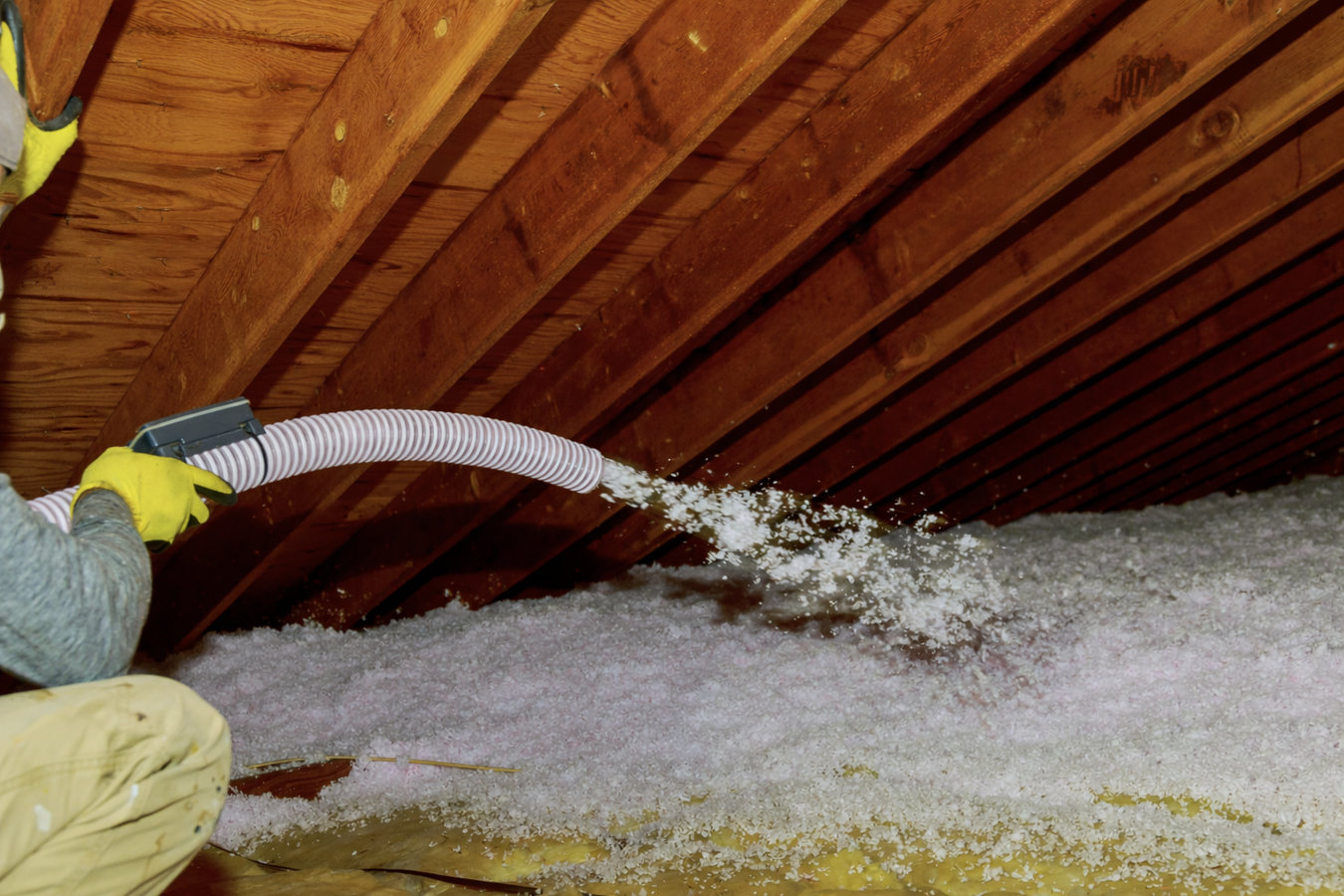
Most Lincoln homes predate current energy codes by decades, and the attic floor is the single highest-impact zone to address first. Our blown-in insulation service covers attic floors, sidewall cavities, and hard-to-reach spaces in older homes where batts cannot be installed cleanly. Loose-fill material settles into the irregular framing common in Lincoln's early 1900s construction and provides even coverage without the gaps that cut batts leave behind.
Lincoln's January lows regularly drop into single digits, and homes with thin attic insulation lose a disproportionate share of their heat through the ceiling. Many of the older homes near downtown Lincoln and along the Route 66 corridor have original vermiculite or compressed fiberglass from the mid-1900s that no longer provides meaningful R-value. Adding depth to the attic floor is the fastest way to reduce heating bills without touching the rest of the envelope.
Lincoln's flat terrain and clay-heavy central Illinois soil mean water stays near foundation walls and under crawl space floors long after rain stops. Homes built on crawl spaces without vapor barriers pull ground moisture into the floor system, which stiffens and eventually rots floor joists and makes first-floor rooms feel cold no matter how warm the furnace runs. Insulating the crawl space walls combined with a ground cover cuts off both paths simultaneously.
For Lincoln homes with damp basement rim joists or crawl space walls that never fully dry out, closed-cell spray foam is the right material. It bonds to concrete and wood framing in a single pass, creates an air and moisture barrier together, and holds its shape through the freeze-thaw cycles that central Illinois delivers every winter. Homes near the low-lying areas of Lincoln where drainage is slower after spring snowmelt see the most immediate benefit.
Brick and wood-frame homes in Lincoln's older neighborhoods were commonly built with no wall insulation at all. The drill-and-fill method injects blown-in material through holes drilled through interior drywall or plaster, then patches the surface so the wall looks unchanged. This approach works well on the two-story brick homes near the Logan County Courthouse and on the frame homes with original wood siding throughout Lincoln's established streets.
Lincoln's older balloon-framed homes have open wall cavities running from the basement sill plate to the attic, which means cold air can travel the full height of the house without restriction. Air sealing the top plates, rim joists, and attic floor penetrations before adding insulation ensures the new material actually performs at its rated R-value. We seal these pathways on every Lincoln attic project as a standard first step.
Lincoln was founded in 1853, and Census data confirms that most of its housing stock was built before 1960. Homes in the city's established residential streets predate energy codes by generations and were constructed without the wall insulation, weatherstripping, or vapor management details that are standard in new construction today. The gap between what those homes have and what current standards require is wide, and it shows up in heating bills every winter and in cold floors every morning from December through March.
Central Illinois soils around Lincoln are predominantly clay-based. Clay holds moisture rather than draining it, which means the soil around foundations and under crawl spaces stays saturated longer after rain events and spring snowmelt. That persistent moisture migrates upward through unprotected crawl space floors and through foundation wall cracks into the living spaces above. Older homes in Lincoln with no vapor barrier and no crawl space insulation are especially vulnerable to this, and the damage accumulates over years rather than appearing all at once.
Lincoln's winters are consistent with the rest of central Illinois: hard freezes by late November, average January lows in the teens, and ground frost that reaches significant depth each year. The freeze-thaw cycle that repeats from November through March puts stress on concrete flatwork, foundation walls, and any moisture that has worked its way into wall cavities. Homes that have been through a century of these cycles without insulation upgrades have usually accumulated enough deferred maintenance that a comprehensive thermal assessment is the right first step before any individual project begins.
Springfield Insulation Company is based in Springfield, roughly 30 miles south of Lincoln on Interstate 55, and we serve Logan County homeowners on a regular basis. We are familiar with the building permit process through the City of Lincoln and with the types of homes that make up most of the Lincoln market: two-story brick homes from the early 1900s near the center of town, modest wood-frame bungalows on the residential side streets, and the newer ranch and subdivision homes built on the outer edges of the city in the postwar decades. Each of those housing types presents different access conditions and different insulation priorities.
Lincoln sits along Interstate 55 and the old Route 66 corridor, and its downtown streets center on the Logan County Courthouse square. The neighborhoods closest to that core have the city's oldest and most densely built housing, including full-brick homes with narrow lots that require careful equipment staging. We work in those neighborhoods regularly and know what the physical constraints look like before the first crew member arrives.
Lincoln is the northern anchor of our Springfield-area corridor, and we also serve homeowners in Springfield, IL to the south. If you are scheduling work in Lincoln, our team is already traveling this corridor regularly and can often fit Lincoln jobs into existing route days without a scheduling delay.
Reach us by phone at (217) 572-9991 or through the contact form. We reply to every Lincoln area inquiry within one business day.
We visit your Lincoln property, inspect the attic, crawl space, and any other areas of concern, and provide a written itemized estimate at no charge. You know the full cost before any work is scheduled.
Installation is scheduled at a time that works for you. Most Lincoln attic and crawl space projects are completed in a single day, and you do not need to rearrange your workday to be present once access has been set up.
We clean up all work areas before leaving and walk through the completed work with you so you can confirm everything was done as specified. Any questions about maintenance or performance are answered before we leave the property.
We serve Logan County homeowners and reply to every Lincoln area estimate request within one business day. No cost, no obligation.
(217) 572-9991The majority of Lincoln's housing stock was built before current energy codes, and many attics in this era of construction have insulation levels that fall far short of the R-49 to R-60 range recommended for central Illinois. We measure existing depth, identify any material that has degraded past its useful life, and recommend the right depth to bring the attic into alignment with current standards. That baseline assessment prevents over- or under-installing and ensures the estimate reflects what the home actually needs.
Our crews travel the I-55 corridor between Springfield and Lincoln on a regular schedule, which means Lincoln jobs are not treated as out-of-market work with added travel overhead. Logan County homeowners get the same pricing and scheduling availability as homeowners in Springfield proper. That regular presence on this corridor means we are also familiar with permit offices and material suppliers that serve this part of central Illinois.
Every Lincoln project starts with a no-cost, no-obligation written estimate that itemizes materials, labor, and scope. Nothing is verbal, and the estimate does not change without your sign-off. Homeowners in Lincoln's older housing stock sometimes encounter surprises when old insulation is disturbed, and we walk through those possibilities during the assessment so there are no unexpected costs on installation day.
Brick exterior homes and balloon-framed wood structures from the late 1800s and early 1900s require different techniques than modern platform-frame construction. The North American Insulation Manufacturers Association provides installation guidelines specific to these older construction methods, and our crews follow those specifications on Lincoln's historic housing stock. Getting the retrofit approach right on these homes preserves the structure while delivering a meaningful improvement in thermal performance.
Lincoln is a community where homeowners stay put and take care of their properties for the long term. We bring that same mindset to every project: accurate assessments, honest estimates, and installation work that performs the way it is supposed to through Logan County winters for years after we leave.
High-performance spray foam that air-seals and insulates in one application.
Learn moreAttic insulation upgrades that reduce heat loss and lower energy bills year-round.
Learn moreLoose-fill insulation blown into attics and walls for complete, gap-free coverage.
Learn moreWhole-home insulation solutions tailored to your house's structure and energy needs.
Learn moreSafe removal of old, damaged, or contaminated insulation before new material is installed.
Learn moreCrawl space insulation that controls moisture and improves floor comfort above.
Learn moreInterior and exterior wall insulation to stop heat transfer and reduce noise.
Learn moreProfessional air sealing that eliminates drafts and improves HVAC efficiency.
Learn moreBasement wall and rim joist insulation for a warmer, drier lower level.
Learn moreDense closed-cell foam offering the highest R-value per inch with a moisture barrier.
Learn moreFlexible open-cell foam ideal for interior walls, ceilings, and sound control.
Learn moreTargeted attic air sealing that stops conditioned air from escaping into the attic.
Learn moreHeavy-duty vapor barriers that protect crawl spaces from ground moisture.
Learn moreComplete vapor barrier installation in crawl spaces and basements for moisture control.
Learn moreInsulation upgrades added to existing homes without major construction disruption.
Learn moreCommercial insulation services for offices, warehouses, and multi-unit buildings.
Learn moreServing these cities and communities.
Lincoln winters are hard on older homes. Call us or submit an estimate request today and we will schedule an on-site assessment within one business day.