Loading...
Serving Springfield, IL and surrounding areas. (217) 572-9991
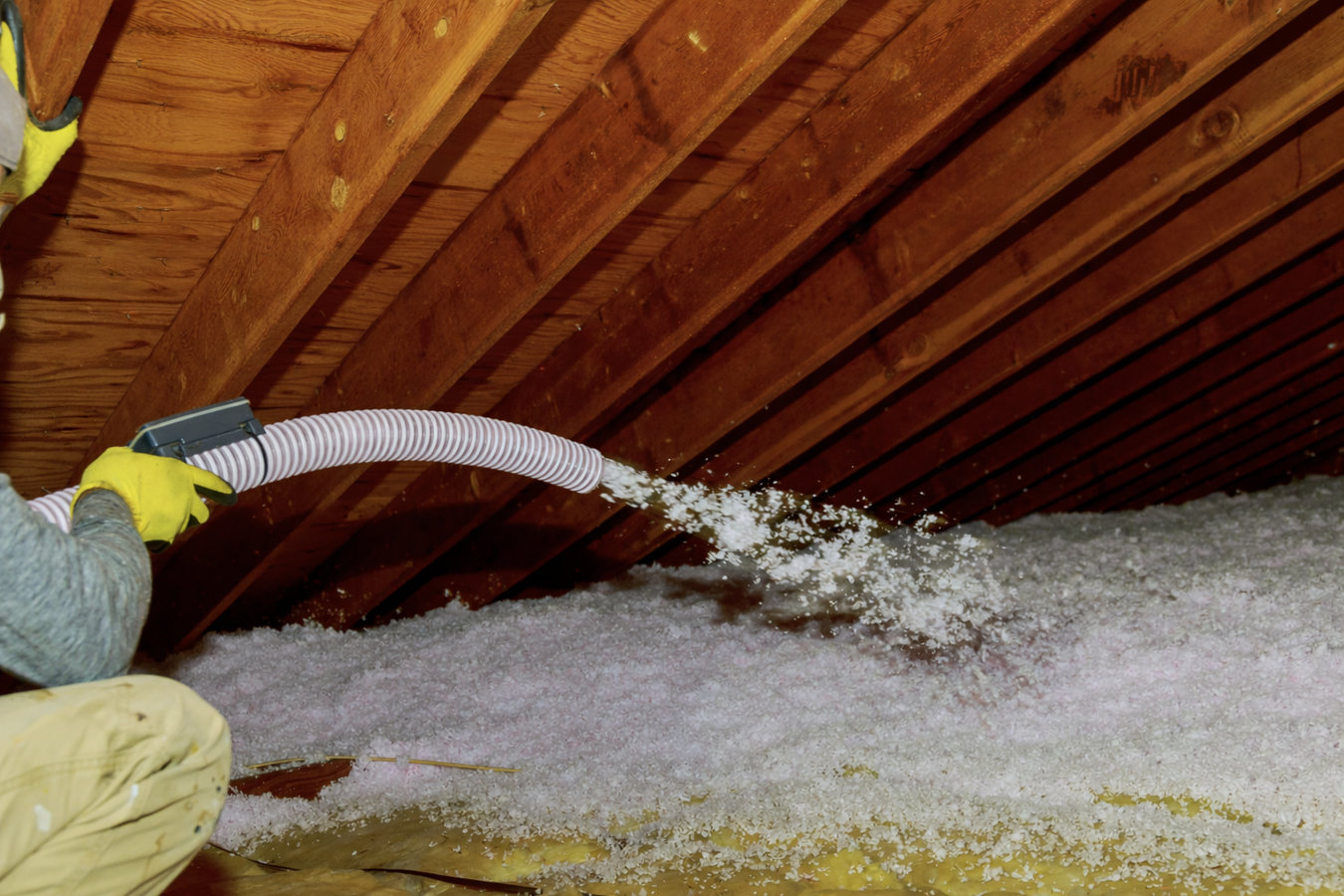
Fiberglass and cellulose blown-in insulation fills every corner your attic has, including the tight spots near the eaves that batt rolls simply cannot reach. Fewer cold spots, lower bills.
Blown-in insulation in Springfield uses fiberglass or cellulose material blown through a large hose into your attic or walls, filling every gap and corner - most attic jobs take two to four hours and require no work inside your living space.
Springfield winters regularly drop below 10 degrees, and summers push past 90 with high humidity. Homes with thin or aged attic insulation feel that full swing on every energy bill. Blown-in is especially effective in older Springfield homes, where irregular attic shapes and knob-and-tube wiring make rigid batts impractical. If you are also dealing with drafty rooms, combining blown-in with whole-home insulation coverage gives you the most complete result.
The U.S. Department of Energy recommends attic insulation at R-49 to R-60 for Springfield's climate zone. If you can see the wooden joists in your attic floor, you are almost certainly below that level.
If your gas bill climbs sharply from October through March, heat is escaping through your attic. Springfield winters are long and cold, and an under-insulated attic is the most common reason central Illinois homeowners overpay for heat. This is especially true in homes built before 1980.
If your upstairs bedrooms are freezing in January and sweltering in July, your attic insulation is the likely cause. A poorly insulated attic acts like an oven sitting above your living space in summer, and a sieve in winter. Blown-in insulation addresses this directly.
Poke your head into your attic. If you can clearly see the wooden beams running across the floor, your insulation is too thin. A properly insulated attic should have material deep enough to bury those joists completely. This check takes about 30 seconds.
Thick ridges of ice building up along your roof in winter mean heat is escaping through your attic and melting snow unevenly. Springfield sees enough freeze-thaw cycles that ice dams are a real problem, and they can push water under shingles and into your home. Better insulation is the long-term fix.
We install both fiberglass and cellulose blown-in insulation in attics, finished walls, and hard-to-reach cavities. Cellulose, made from recycled paper, is a strong choice for Springfield homes where humidity is a consideration since it handles moisture better than fiberglass in damp conditions. Fiberglass blown-in lasts longer undisturbed and settles less over time.
For walls in older homes, we drill small holes in the exterior siding or interior drywall, inject the material, and patch the openings. Most homeowners say the patching is barely visible after painting. If your walls have never been insulated, this is often the most cost-effective way to add coverage without a major renovation. We also pair blown-in attic work with wall insulation services when homeowners want comprehensive coverage in a single visit.
Before any material goes in, we seal air gaps around light fixtures, pipes, and wiring penetrations. Skipping that step means even thick insulation underperforms. The air sealing is included in our standard blown-in jobs, not an add-on.
Best for homes where the attic is accessible and insulation is thin or settled.
Best for older homes where walls were never insulated or original material has degraded.
Best for homes where moisture management is a concern, such as Springfield's older stock near the river.
Best for attics that stay dry and where long-term settled depth is a priority.
Springfield sits in IECC Climate Zone 5, where the Department of Energy recommends higher insulation levels than most of the country. Winters regularly drop below 10 degrees and summers push past 90 with high humidity, so your attic insulation is working hard in both directions. A large share of Springfield's neighborhoods, including homes near Iles Park, Aristocrat Acres, and the Southeast Side, feature housing built in the 1940s through 1970s. Many were never insulated to modern standards, and what is there has had decades to settle and degrade.
Homes built before the 1950s may also have knob-and-tube wiring in the attic, which requires a licensed electrician to review before insulation can go directly over it. We flag this during our free estimate rather than discovering it on installation day. Homeowners in Decatur and Bloomington face the same older-housing challenges, and we serve those areas regularly.
Ameren Illinois, which serves most of Springfield, currently offers rebates for qualifying attic insulation projects. The federal Inflation Reduction Act also provides a tax credit covering up to 30 percent of the project cost. We help every customer identify which programs apply and document the work properly so the rebate or credit is easy to claim. Homeowners in Champaign can also access similar programs from their local utility.
We respond within 1 business day. A brief conversation covers your home's age, size, and what is prompting the call. No sales pressure, just scheduling.
We go into your attic, measure existing insulation depth, check for air leaks, and look for any issues like old wiring or moisture. Takes 20 to 30 minutes, and we walk you through what we find before quoting.
You receive a written quote covering the scope of work, materials, and total cost. This is the right time to ask about permits, Ameren rebates, and what happens if something unexpected turns up in the attic.
The blowing machine sits outside. We seal air gaps first, then blow in the material. Most attics are done in one to three hours. Cleanup is included before we leave, and we provide documentation for your rebate or tax credit claim.
We respond within 1 business day. There is no obligation to proceed after the estimate. Once you submit your request, someone from our office will call to schedule a free on-site assessment at a time that works for you.
(217) 572-9991Most blown-in jobs deliver poor results when air sealing is skipped. We seal every gap around light fixtures, pipes, and wiring penetrations before the material goes in. That step is standard, not an upsell.
We operate across Springfield, Decatur, Bloomington, Champaign, and 8 other central Illinois communities. Local knowledge matters, especially in older housing stock with irregular attic layouts.
Ameren Illinois rebates and federal tax credits require specific documentation. We provide everything you need to claim both programs, so the money does not go unclaimed because of paperwork. Ask us about the IRS Energy Efficient Home Improvement Credit when you call.
Springfield homes built before 1960 sometimes have knob-and-tube wiring or moisture issues that affect the job. We identify these during the free estimate, explain what they mean, and give you options before work begins.
Springfield has a large stock of homes built before modern insulation standards. We have worked on properties across every neighborhood in the city and know what to expect inside older attics. Every job comes with documentation so you can claim any rebate or tax credit you qualify for. Learn more about the federal energy-efficient home improvement credit.
Coordinate attic, wall, and crawl space insulation in a single project for a complete thermal envelope.
Learn moreRetrofit blown-in or batt insulation into existing walls without a full gut renovation.
Learn moreSpringfield winters will not wait - schedule your free attic assessment now and start saving on your next heating bill.