Loading...
Serving Springfield, IL and surrounding areas. (217) 572-9991
If you can see the tops of your attic floor joists, your insulation is too low for Springfield winters. Heat rises straight out of your ceiling every month you wait.
Attic insulation in Springfield slows heat loss in winter and keeps radiant heat from baking down through your ceiling in summer - most projects are completed in a single day and include air sealing before any new material goes in. The attic is where the most heat escapes in a typical Springfield home, and it is also the easiest place to fix without major disruption.
Springfield sits in a climate zone where federal guidelines call for significantly more insulation than many older homes currently have. If your home was built before 1990 and no one has ever inspected the attic, there is a good chance you are operating well below the recommended level. We measure what you have, compare it to what your home needs for this climate, and give you a written estimate before any work is scheduled.
If your attic needs more than just insulation, we also offer blown-in insulation as a standalone service and attic air sealing for homes where air leaks are the primary issue rather than depth of coverage.
If your gas or electric bills jump dramatically during the coldest months without any change in how you use your home, your attic is a likely culprit. Heat rises, and if there is not enough insulation overhead, it escapes straight through your ceiling. This is one of the most consistent signs that your attic insulation is not doing its job.
If the rooms directly below your attic feel noticeably colder in winter or stuffy in summer even with the air conditioning running, insufficient attic insulation is often the cause. This is especially common in older Springfield homes where insulation was added unevenly or has settled in some areas over decades.
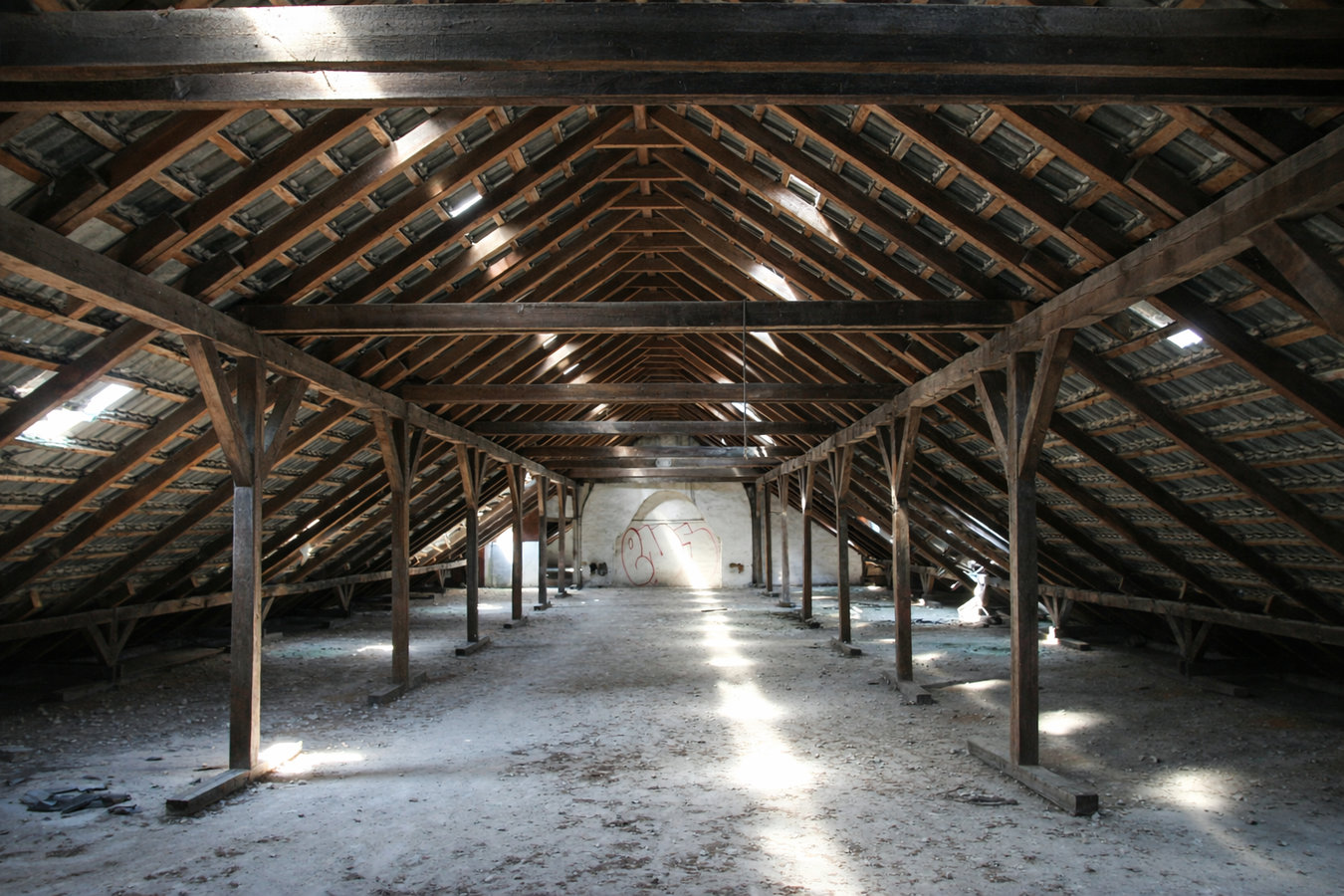
If you peek into your attic and can clearly see the wooden beams running across the floor, your insulation level is almost certainly too low for Springfield's climate. Adequate insulation should cover those beams completely. This is a quick check anyone can do with a flashlight and a few minutes.
Ice dams, the thick ridges of ice that build up along the edge of a roof in winter, are a classic sign that heat is escaping through your attic and melting snow unevenly. Springfield gets enough winter precipitation that ice dams are a real concern, and they can cause water to back up under shingles and leak into your home.
Most attic insulation projects in Springfield use blown-in loose-fill material, either fiberglass attic insulation or cellulose, because it fills gaps and odd-shaped spaces without tearing anything apart. It is the most practical choice for existing homes where the attic framing is already in place. Before any material goes in, we seal air leaks around light fixtures, plumbing pipes, and wall cavities, and we install ventilation baffles along the eaves to protect airflow. Skipping those prep steps is the difference between a job that performs and one that just looks complete. Our blown-in insulation page explains the material choices and typical project scope in more detail.
For attics being insulated as part of a larger project, or where air sealing is the primary concern, we also offer attic air sealing as a standalone service. Sealing the attic floor before insulating delivers a noticeably better result than adding insulation on top of existing air leaks.
Every project starts with a measurement visit. We check what is currently in the attic, identify any moisture or ventilation issues, and give you a written estimate that covers the full scope before anyone starts work.
Fast, thorough coverage that fills irregular spaces without disturbing existing framing.
Dense coverage with good settling resistance, suited for older attics with varied framing.
Pre-cut blanket sections for new construction or attics with uniform joist spacing.
Combined prep and install for the best performance results, especially in homes built before 1990.
Springfield sits in a climate zone where summer highs regularly reach the upper 90s and winter lows can drop well below zero. That is a swing of more than 100 degrees between seasons, which means your attic insulation is working hard in both directions all year long. Federal guidelines for this climate call for more insulation than many older Springfield homes currently have.
A significant number of Springfield homes were built before 1980, many in established neighborhoods like Iles Park, Aristocracy Hill, and older sections of the south side. Homes of that era were often built with far less attic insulation than is recommended today, and what was installed has had decades to settle, compress, and lose effectiveness. Springfield's humid summers also create real moisture risk in attics that are not properly ventilated, which is why air sealing before insulation installation matters so much in this climate. We work throughout Springfield and serve surrounding communities including Champaign and Decatur.
Ameren Illinois offers rebates for qualifying attic insulation upgrades, and homeowners may also qualify for a federal tax credit worth up to 30 percent of project costs. The IRS Energy Efficient Home Improvement Credit applies to qualifying insulation materials. Ask us when you call whether your project and materials are eligible.
We ask a few basic questions about your home's age, approximate attic size, and whether you have noticed comfort or energy bill issues. Most Springfield contractors can schedule a free in-home estimate within a few days. We respond within 1 business day.
We go into your attic to check how much insulation is currently there, whether it is in good condition, and whether there are ventilation issues to address first. You receive a written estimate covering the materials, coverage depth, and total cost.
Before new insulation goes in, we seal gaps around light fixtures, plumbing pipes, and wall cavities, and install ventilation baffles along the eaves. This prep work is what separates a job that performs from one that just looks complete.
The crew blows insulation evenly across the attic floor, working from the far corners toward the hatch. Most Springfield homes are done in two to four hours. We leave you with documentation of materials and depth, which you need for any rebate or tax credit claims.
We respond within 1 business day, and there is no obligation to move forward after the estimate. Once you submit, someone from our office calls to schedule a free on-site visit at your home.
(217) 572-9991Adding insulation over unsealed air leaks produces results that look good on paper but fail in practice. We seal the attic floor before any material goes in, which is the step most contractors skip or charge extra for.
You see the materials, the coverage depth, and the full cost in writing before anyone opens a bag of insulation. No verbal estimates that change when the invoice arrives.
We have worked in older Springfield neighborhoods and newer subdivisions across Sangamon County. Homes built in different eras need different approaches, and we assess each one individually.
We provide the contractor documentation you need to claim Ameren Illinois rebates and the federal energy efficiency tax credit. The paperwork is part of the job, not something you have to sort out afterward.
Attic insulation is one of the highest-return improvements a Springfield homeowner can make, but only when it is done correctly. Proper air sealing, ventilation protection, and consistent coverage depth are what separate a job that delivers real energy savings from one that just adds material. We do all three on every project.
Blown-in loose-fill insulation reaches tight attic corners and odd framing gaps that batt material cannot fill evenly.
Learn moreSeal gaps around fixtures, pipes, and wall tops in your attic before insulating to prevent conditioned air from escaping through your ceiling.
Learn moreCall now for a free on-site attic insulation estimate in Springfield, IL. We measure what you have, tell you what you need, and put it in writing before any work begins.