
Loading...
Serving Springfield, IL and surrounding areas. (217) 572-9991
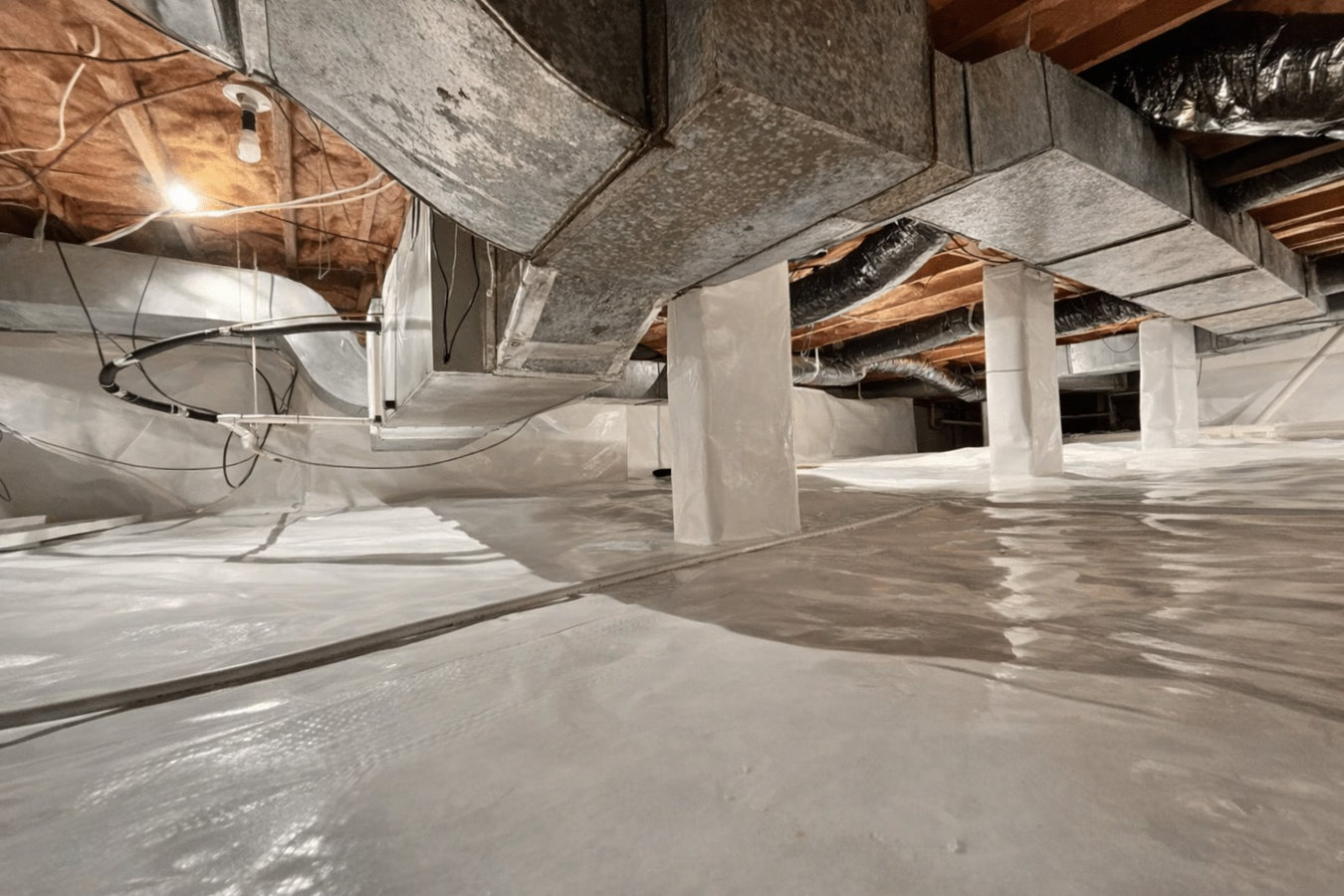
Springfield's clay soil and wet springs push ground moisture up into your floors and wood framing. A properly installed vapor barrier stops it at the source before real damage builds up.
Crawl space vapor barrier installation in Springfield blocks ground moisture from rising into your home's floor structure by laying heavy-duty plastic sheeting across the crawl space floor and up the foundation walls - most jobs are completed in a single day. Springfield sits on dense clay soil that holds water near the surface for days after rain or snowmelt, and without a barrier between that wet ground and your wood framing, moisture works upward without interruption.
Many Springfield homes, particularly those built in the 1940s through 1970s in neighborhoods like Iles Park, Laurel-Harvard Park, and the older streets near downtown, were constructed with bare dirt crawl space floors and no moisture protection at all. If you have noticed musty odors, cold floors, or soft spots underfoot, ground moisture is a likely cause. A vapor barrier is often the most direct fix, and it pairs well with crawl space insulation when both issues need to be addressed at once.
The difference between a barrier that lasts 20 years and one that fails in five comes down almost entirely to how seams and edges are handled. We tape every seam, overlap sheets by at least 12 inches, and fasten the material up the foundation walls so moisture cannot find a path around it.
A persistent earthy smell that gets stronger after spring rains or during Illinois's humid summers is one of the clearest signs that ground moisture is entering your home from below. That smell is typically mold or mildew growing on damp wood or insulation in the crawl space. Springfield's clay soil stays wet for extended periods, making this a common problem here, especially in older homes.
If sections of your floor feel noticeably colder than others in January or give slightly when you walk on them, moisture damage to the floor structure below is a likely cause. Springfield's freeze-thaw winters push ground moisture upward repeatedly, and years of that exposure softens wood joists and subfloor panels. This pattern is especially common in pre-1980s homes in Iles Park and older south-side neighborhoods.
If a flashlight through the access hatch shows water droplets on pipes, puddles on the dirt floor, or soil that looks dark and saturated, moisture is already in the space. Springfield's flat terrain and clay-heavy Sangamon County soil hold water near the surface long after heavy rain, making this a frequent finding in spring and after summer storms.
When moisture gets into your floor insulation it reduces the insulation's ability to hold heat, and your furnace works harder every winter. If your Ameren Illinois bills have climbed without any change in your habits, a wet crawl space degrading your insulation is worth investigating. A dry crawl space lets your insulation perform the way it was designed to.
Every job starts with a thorough look at what is already in the crawl space. We check for standing water, existing insulation, mold, or damaged wood that needs to be addressed before any new material goes in. If there is old material to remove, we handle that first. We do not install a new barrier on top of a problem.
We install heavy-duty polyethylene sheeting, at minimum 10-mil thickness, across the entire crawl space floor. Seams are overlapped by at least 12 inches and taped with rated seam tape. The material is run up the foundation walls and fastened in place so ground moisture cannot bypass the edges. For homes where the full crawl space, including walls and vents, needs to be sealed, we also offer complete encapsulation. Either way, the goal is a dry, protected space that works for your home's specific conditions.
Homes with both moisture and insulation concerns benefit from combining vapor barrier work with vapor barrier installation across basement walls or pairing with full crawl space insulation in a single project to avoid two separate mobilizations. The U.S. Department of Energy recommends sealing crawl spaces as one of the highest-impact steps a homeowner can take to improve comfort and reduce moisture damage.
Heavy-duty sheeting across the crawl space floor with taped seams and wall coverage; the right starting point for most Springfield homes.
Seals the entire crawl space including walls and vents; best for homes with serious or recurring moisture intrusion.
Needed when damaged insulation, standing water, or mold is present before the new barrier can be installed correctly.
Addresses moisture and heat loss together in one visit; ideal for older Springfield homes dealing with both problems at once.
Springfield sits on clay-heavy Sangamon County soil that does not drain quickly after rain or snowmelt. Clay holds water near the surface for days or weeks at a stretch, putting steady upward vapor pressure on any bare dirt crawl space floor. That pressure is not seasonal, it is persistent. During Illinois's wet springs and humid summers, the moisture load increases, and homes without a barrier feel it inside, through musty air, cold floors, and rising utility costs.
A large share of Springfield's homes were built before moisture control was standard practice. Homes in established neighborhoods like Iles Park, Laurel-Harvard Park, and the blocks surrounding downtown Springfield were commonly built with bare dirt crawl spaces. Many have sat unprotected for decades. The Building Science Corporation documents how vented crawl spaces in humid climates, which describes central Illinois summers, often make moisture problems worse rather than better, bringing warm moist air in and letting it condense on cooler crawl space surfaces.
We work on homes throughout the area, including in Jacksonville, Lincoln, and across Springfield. Every crawl space we look at in this region has the same underlying pressure: clay soil, seasonal moisture swings, and older construction that was not built to manage either.
We respond within 1 business day. We will ask about your home's size, your crawl space access point, and any specific problems you have noticed. No obligation, no pressure.
We come out and look at the actual space, checking for standing water, mold, damaged insulation, and the size and layout. We walk you through what we find before we write a number. This visit takes 30 to 60 minutes.
You receive a written quote that specifies material thickness, seam sealing method, and any prep work included. This is the right time to ask questions about the thickness of the sheeting and how the walls are handled.
The crew clears the crawl space of debris, lays the sheeting across the entire floor, tapes all seams, and fastens the material up the foundation walls. You can stay home. Most jobs are complete in four to eight hours.
Free estimate, no obligation. We will tell you exactly what is in your crawl space and what it will take to fix it - before you commit to anything.
(217) 572-9991A large share of our jobs are in Springfield's older neighborhoods where crawl spaces have bare dirt floors that have never been protected. We know what these spaces look like, what problems to expect, and how to prepare them correctly before any new material goes in.
Thinner plastic is cheaper upfront but tears faster, especially when a contractor or inspector needs to walk through later. We use heavier material that holds up over time, and we will tell you exactly what thickness we are installing before we start the job.
Loose seams are where moisture gets through. We overlap sheets by at least 12 inches and tape every seam with rated tape. The material also runs up the foundation walls and is fastened there, not folded at the base. That is the difference between a 5-year fix and a 20-year one.
Our crews work across Sangamon County every week and know the older housing stock here. Every vapor barrier job comes with a free written estimate and a documented record of the work, from the first walkthrough to the final inspection.
Vapor barrier work is one of those jobs where the difference between a good installation and a poor one is invisible once the crawl space hatch is closed. We show you photos of the finished work before we leave so you know exactly what was installed and how it was sealed.
Full vapor barrier services for basements and crawl spaces, including material selection, prep, and proper seam sealing for long-term moisture control.
Learn moreFloor joist insulation and crawl space encapsulation to reduce heat loss and keep floors comfortable through Springfield's cold winters.
Learn moreSpringfield's wet springs arrive fast. Call us now to schedule your free estimate and get your crawl space protected before ground moisture does another season of damage.