Loading...
Serving Springfield, IL and surrounding areas. (217) 572-9991
Gaps around attic fixtures, pipes, and wiring drain your heat all winter long. Sealing them before adding insulation is the step most contractors skip and the one that matters most for Springfield homes.
Attic air sealing in Springfield means finding and closing the gaps around light fixtures, plumbing pipes, electrical penetrations, and wall tops in your attic floor - most residential jobs take one day, and the work can be done without disturbing your living space or storing items in other rooms.
Insulation slows heat from moving through solid surfaces, but it cannot stop air from moving through gaps. If your attic has unsealed holes, warm air escapes in winter and hot, humid air pours in during summer, no matter how much insulation sits on top. Sealing first, then insulating, is the order that actually works. This matters even more in Springfield, where the seasonal temperature swing exceeds 100 degrees and every degree of heat that escapes shows up directly on your Ameren bill. If you are also considering a full insulation upgrade, pairing air sealing with whole-home air sealing services ensures every part of your thermal envelope is addressed, not just the attic.
The ENERGY STAR Seal and Insulate program recommends sealing attic air leaks before adding insulation, noting that the combination delivers far better results than insulation alone. That guidance holds especially true for older Springfield homes where decades of settling have opened additional gaps.
If your gas bill jumps sharply during the coldest months even though your thermostat stays steady, heat is escaping somewhere. The attic is the most common culprit because warm air naturally rises and finds any gap it can. In Springfield, where winters regularly push into the single digits, that loss compounds quickly over a heating season.
If the bedroom at the end of the hall is always colder in winter or stuffier in summer than the rest of the house, air is leaking out of or into the attic above. Your heating and cooling system works harder to compensate, and the result is rooms that never quite feel comfortable no matter how you adjust the thermostat.
Ice dams are the ridges that build up along the edge of your roof after a snowfall. They form when heat escaping through the attic melts snow on the upper part of the roof, and that water refreezes at the cold eave. Springfield gets enough winter precipitation that ice dams are a real seasonal concern, and they signal unsealed heat loss in your attic.
If you peek into your attic and see dark streaks or dirty patches on the insulation, air has been moving through it for a long time. Air carries dust particles, and those particles get trapped in the insulation as air passes through gaps in the attic floor. It is one of the clearest visible signs that air sealing work is overdue.
We seal gaps around recessed lights, plumbing and electrical penetrations, the tops of interior walls, attic access hatches, and anywhere a pipe or wire passes through the ceiling. These spots are invisible from below but can add up to the equivalent of leaving a window open all winter. A trained contractor documents what is found before starting work so you know exactly what you are paying to fix.
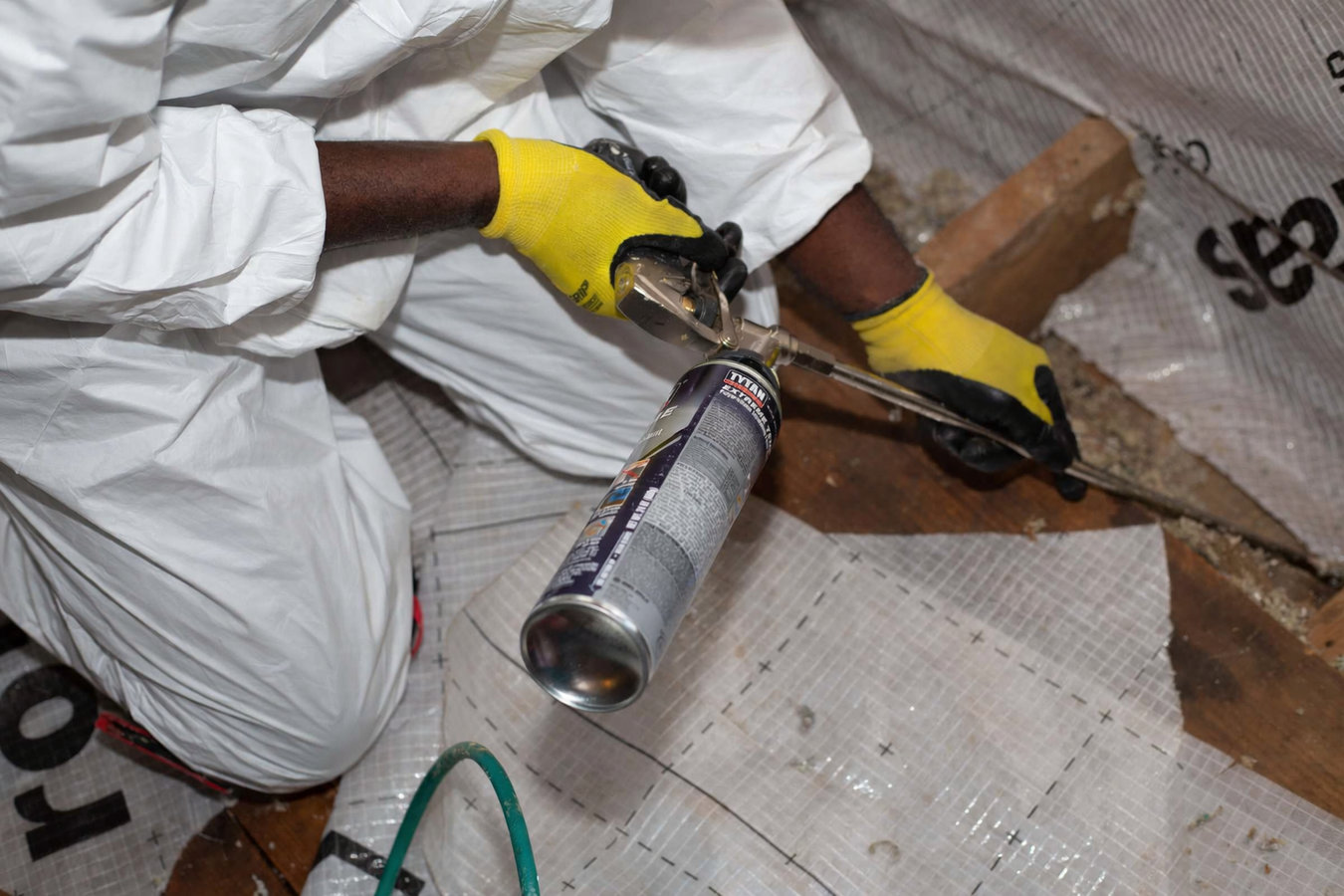
Depending on the size of the opening, we use spray foam, caulk, rigid foam board, or a combination of materials. Large bypasses around plumbing stacks and framing cavities get rigid material and foam sealing; small gaps around wires get caulk. Using the right material for each type of penetration is what separates thorough work from a surface treatment that fails within a few years. Our work also integrates with crawl space vapor barrier installation when moisture management is part of the same project.
Attic air sealing is frequently paired with blown-in or spray foam insulation on the same visit. Bundling both services costs less than scheduling them separately and gives you a finished thermal envelope rather than half a solution. In older Springfield homes, we also check for bathroom exhaust fans venting into the attic rather than outside, which is a moisture problem that should be corrected at the same time as the air sealing work to prevent condensation and mold from developing after the new sealing is in place.
Best for homes with recessed lights, plumbing stacks, and electrical boxes that were never sealed at the ceiling plane.
Best for older Springfield homes where gaps at the tops of interior walls connect living space to the attic.
Best for homes with pull-down attic stairs or simple hatches that have no insulation or weatherstripping.
Best for homeowners who want the full attic upgrade in one visit rather than two separate appointments.
Springfield sits in central Illinois, where winter lows regularly drop into the single digits and summer highs push past 90 degrees with sustained humidity. That wide swing means your attic is working hard in both directions all year. An unsealed attic in Springfield is not just a winter problem; it is a year-round energy drain. Most of Springfield's housing stock was built between the 1940s and 1980s, a period when attic air sealing was not a standard part of construction. If your home is more than 30 years old and the attic has never been inspected, there is a strong likelihood that gaps exist, even if you have not noticed obvious symptoms.
Springfield's humid summers also create a moisture risk in poorly sealed attics. When warm, moist outdoor air finds its way into a cooler attic space, condensation can form on surfaces and eventually lead to mold or wood rot. Proper air sealing reduces the amount of humid air that migrates into the attic from below, which is especially important in Springfield homes where older bathroom fans may already be venting moisture upward. Homeowners in Bloomington and Champaign face the same older-housing and climate conditions, and we serve those areas regularly.
Ameren Illinois serves most of Springfield and has historically offered rebates for qualifying insulation and air sealing work. The federal Inflation Reduction Act expanded tax credits for home energy improvements, and attic air sealing often qualifies when properly documented. The Building Performance Institute sets the standards for assessing and sealing air leaks that we follow on every job. Homeowners in Normal also benefit from the same energy efficiency programs through their local utility providers.
We respond within 1 business day. A brief conversation covers your home's age, any comfort or energy bill issues you have noticed, and whether you have had any prior insulation work done. This is not a sales call; it is how we figure out what kind of assessment makes sense.
We come to your home and look at the attic: size, current insulation depth, and where the gaps and penetrations are. Some assessments include a blower door test to precisely measure air leakage. You do not need to do anything special to prepare, just make sure the attic hatch is accessible.
You receive a written estimate explaining what work will be done, what materials will be used, and the total cost. If Ameren Illinois rebates or a federal tax credit apply to your project, that is noted in the estimate so there are no surprises at invoice time.
The crew works in the attic, sealing gaps with foam, caulk, or rigid material based on the type of opening. Most jobs finish in one day. Before leaving, the contractor walks you through what was found and sealed, ideally with photos, and confirms that attic ventilation is still working correctly.
Free estimate, written quote before any work begins. We respond within 1 business day.
(217) 572-9991The majority of our attic air sealing work is in Springfield homes built before the 1980s, where gaps at wall tops, around old plumbing stacks, and near original ceiling fixtures are standard findings. We know where to look and what to do when the gaps are unusual or difficult to reach.
Every attic air sealing job comes with a written estimate and a clear record of what we sealed and where. You get a documented account of the work and a direct point of contact if anything needs a second look. That kind of paper trail is something too many contractors in Springfield skip.
Ameren Illinois serves most of Springfield, and their energy efficiency rebate programs have historically included qualifying air sealing and insulation work. We document every project so the paperwork is ready when you file your claim. Across the dozens of Springfield-area projects we complete each year, we know which programs apply and how to capture the available savings.
A sealed attic still needs working soffit and ridge vents to prevent moisture buildup. We verify that your attic ventilation is correct before the job is complete, and we flag bathroom fans venting into the attic rather than outside, a moisture problem that has to be corrected at the same time. This is the step that separates careful work from a job that creates new problems.
Attic air sealing done correctly reduces ice dam risk, lowers heating and cooling bills, and makes your home noticeably more comfortable within a few days of the work being done. In Springfield, where the climate demands a tight thermal envelope, this is one of the highest- return investments a homeowner can make before winter arrives.
Control moisture at ground level in your crawl space to protect framing and support a complete thermal envelope.
Learn moreWhole-home air sealing that addresses gaps beyond the attic, including rim joists, basement sill plates, and wall penetrations.
Learn moreSpringfield's heating season moves fast. Lock in your appointment now so your home is sealed before the first hard freeze of the year.